Why the 2026 World Cup Could Be the Last Great Tournament of Its Kind
The expanded 48-team World Cup arrives this summer as the biggest sporting event in human history — but bloated formats, commercial saturation, and calendar congestion may mean we're witnessing the peak of international football before a long decline.
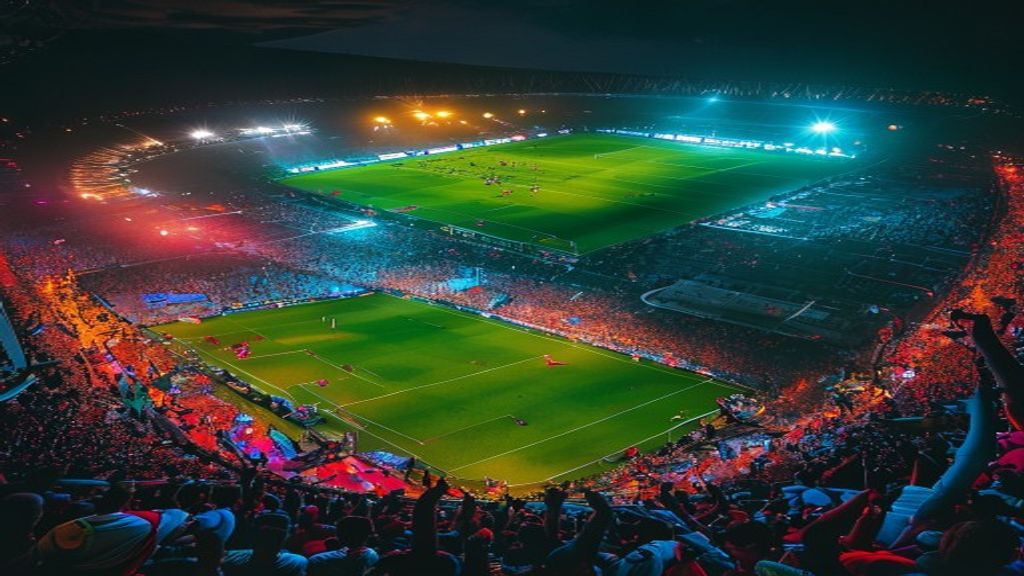
Why the 2026 World Cup Could Be the Last Great Tournament of Its Kind
It arrives this summer like a freight train: 48 nations, 16 venues across three countries, 104 matches across six weeks, and an estimated global audience that will shatter every viewership record in the history of sport. The 2026 FIFA World Cup, hosted across the United States, Canada, and Mexico, is by almost every measurable metric the largest singular sporting event humanity has ever organized.
And yet — whisper it quietly among the ticker tape and corporate branding — this may also be the moment international football reaches its high-water mark.
The Expansion Experiment
FIFA’s decision to expand the World Cup from 32 to 48 teams was always a commercial calculation dressed in the language of inclusivity. More nations, more markets, more broadcast deals. The argument for sporting legitimacy was thinner: yes, some historically underrepresented confederations gain additional slots, but the integrity of the qualification pathway narrows correspondingly.
The result is a group stage that, by statistical probability, will include a meaningful number of mismatches. When a footballing giant faces a debutant nation in a World Cup group game, the result is rarely a spectacle — it is an obligation. The magic of the World Cup has historically lived in its knife-edge competitive tension. Bloat that field, and you inevitably dilute that tension across at least a third of the group stage.
The Calendar Is Cracking
There is a deeper structural issue lurking beneath the excitement of 2026: elite players are arriving at this tournament more exhausted than any generation of World Cup athletes before them.
The expansion of the UEFA Champions League to a 36-team league phase, the introduction of the revamped Club World Cup (itself a month-long commitment for the world’s best clubs in 2025), and the relentless Premier League and European domestic calendar have produced a situation where many of the tournament’s most anticipated stars will have played over 65 matches before a World Cup ball is kicked. We are asking extraordinary athletes to produce extraordinary performances on deeply depleted reserves.
The injury list heading into June 2026 is already alarming. Several marquee players have been managing chronic fatigue conditions throughout the club season — conditions their clubs and national federations have competing, irreconcilable interests in treating.
The Cultural Stakes
Beyond tactics and fixture congestion, there is something broader worth examining: the World Cup’s role as a cultural moment is changing.
For decades, the tournament operated as a rare, quadrennial rupture in the sporting calendar — something that felt genuinely apart from club football’s relentless machine. Families who never watched a league match gathered around televisions for national games. Offices divided by allegiance. Cities stopped. The World Cup was different because it was scarcely available.
Streaming fragmentation, the 24/7 sports content economy, and the sheer volume of elite football now available year-round have eroded that scarcity. The 2026 tournament will be accessible on more platforms, in more languages, to more people than ever before. But accessibility is not the same as emotional urgency. The question is whether a generation raised on constant elite football can experience the same sense of occasion that made previous tournaments feel seismic.
What Makes This One Still Worth Celebrating
None of this is to say 2026 will not produce extraordinary football. It almost certainly will. The knockout rounds, when the field condenses to its best, will deliver the kind of football that transcends all criticism of format and commercialization. There will be a moment in a quarterfinal — a late goal, a penalty saved, a tactical masterstroke — that unites a billion viewers in the same held breath. The World Cup still has that power.
And the three-nation hosting model, for all its logistical complexity, creates a genuinely novel cultural backdrop. Football being played in cities that have rarely been part of the game’s global story — that matters. Representation in hosting, not just participation, shifts something in the sport’s long cultural narrative.
Conclusion
The 2026 World Cup is almost certainly going to be the most-watched, most-discussed, most-commercially-successful sporting event in history. Whether it is the best depends on how you weigh scale against soul. What seems clear, looking at the trajectory of FIFA’s ambitions, European super-league pressure, and calendar chaos, is that the version of international football we are watching this summer — imperfect, bloated, but still capable of genuine magic — is approaching a crossroads.
Watch it carefully. It may not look quite like this again.