Cricket's T20 Revolution Is Winning the War — But Losing Something Sacred
T20 cricket has saved the sport commercially and introduced it to entirely new audiences, but the relentless acceleration of the format is quietly eroding the technical and cultural foundations that made cricket unique among all world sports.
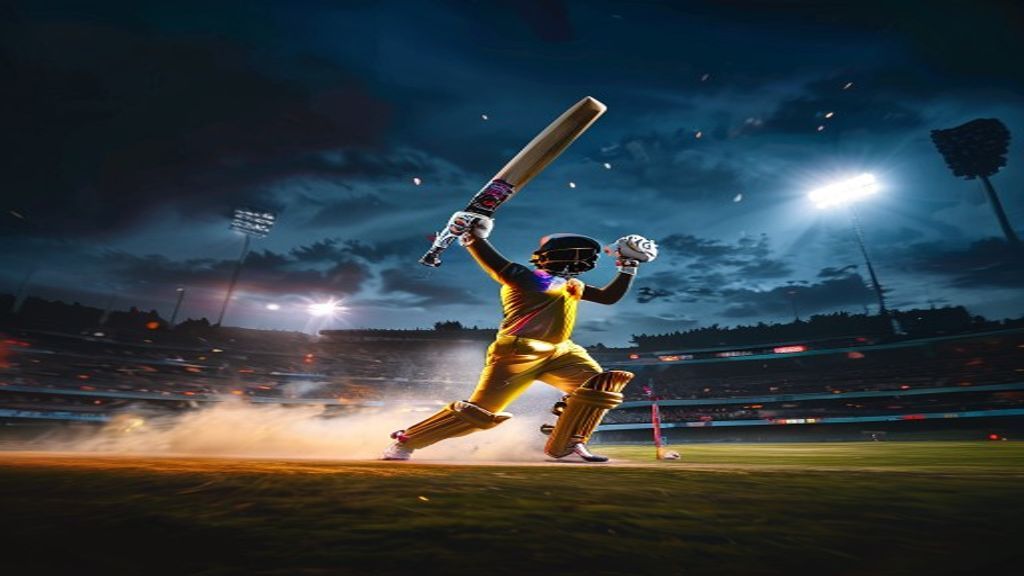
Cricket’s T20 Revolution Is Winning the War — But Losing Something Sacred
In 2003, a marketing executive at the England and Wales Cricket Board pitched a shortened format of cricket to a skeptical audience of county administrators. The idea was simple: two hours, maximum entertainment, bring in the crowds who couldn’t give five days to a sport. They called it Twenty20.
Twenty-three years later, that experiment hasn’t just succeeded — it has fundamentally restructured the global economy of cricket, the career priorities of its players, and the very language of the game. Whether that’s a triumph or a quiet tragedy depends on where you sit in cricket’s vast, fractious congregation of believers.
The Commercial Case Is Unanswerable
Let’s be direct: T20 cricket saved the sport in key markets. In the early 2000s, cricket’s global footprint was shrinking outside the Indian subcontinent. Test match attendances in England were declining. The West Indies, once the game’s most romantic force, were in structural freefall. Australia’s Sheffield Shield was drawing crowds that would embarrass a local park game.
The Indian Premier League, launched in 2008 and now generating over $12 billion in brand value, didn’t just create wealth — it created spectacle accessible to a generation raised on YouTube highlights and attention economies measured in seconds. By 2025, the global T20 franchise ecosystem spans the UAE, South Africa, the United States, the Caribbean, and beyond, with broadcast deals that dwarf anything Test cricket could dream of.
New audiences are watching cricket who had never watched cricket. That is, unambiguously, good.
What the Format Demands — And What It Discards
Here is where the argument gets harder. T20 batting has developed its own extraordinary skill set — the ramp shot over the keeper’s head, the switch-hit, the pre-meditated scoop off 90mph deliveries. These are athletic feats of remarkable sophistication. Do not let anyone tell you a T20 specialist is not a gifted cricketer.
But the development pathway for young cricketers is being quietly rewired. Coaches at academies across England, Australia, and the Caribbean report the same thing: teenage batters arrive with no defensive technique. Why would they have one? Defensive play in T20 is nearly always wrong. The forward defensive — the fundamental building block of batsmanship for 150 years — is now essentially irrelevant to 80% of professional cricket played globally.
Bowlers face an equivalent distortion. The patient, suffocating off-spinner who turns the ball an inch and exploits drift over a 90-over Test innings is a dying art. What sells in franchise cricket is variation, pace-off deliveries, and the ability to defend 18 runs off the last over. Both skill sets are valid. But only one of them still exists in the wild.
The Test Match and Its Tenuous Future
Test cricket is, by every objective measure, the most sophisticated team sport competition on Earth. A five-day contest that rewards patience, tactical depth, psychological endurance, and technical mastery across every conceivable condition is something no other sport can claim to offer. Its greatest moments — a rearguard draw on a crumbling pitch, a lower-order partnership that steals a series — are genuinely unreproducible in any compressed format.
And yet, as of May 2026, only four nations can sustain a domestic cricket ecosystem that credibly develops Test-quality players. The rest are building T20 factories. When the current generation of Test specialists retires, the pipeline behind them looks increasingly thin.
The ICC’s Future Tours Programme remains structurally biased toward bilateral series in favorable windows, squeezing Test cricket into a shrinking share of the international calendar. The financial gravity of franchise leagues means the best players are increasingly negotiating their Test availability rather than treating it as a given.
A Coexistence, Not a Choice
The most honest answer is that these formats need not be enemies — but the cricket establishment has been catastrophically slow to manage their relationship. A World Test Championship that genuinely mattered to neutral fans, a franchise calendar that explicitly protected a Test window, and development programs that insisted on technical foundations before adding T20 flair would allow both forms to thrive.
Instead, cricket is letting market forces make the decision. And market forces, left alone, are not sentimental about 150-year-old traditions.
Conclusion
T20 cricket is thrilling, globally relevant, and financially essential. It has brought the game to people who deserved access to it. But cricket without its Test soul is just another entertainment product competing in an infinitely crowded market — and that market has no loyalty. The sport’s administrators have a narrow window to build a future where both formats are genuinely valued. The clock, appropriately enough, is ticking.