The NBA's Pace Problem: When "Exciting" Basketball Becomes Exhausting
The NBA has never been faster, and its scoring numbers have never been higher — yet a growing number of fans and analysts feel emotionally disconnected from the game. The league's obsession with pace may be engineering the joy out of basketball.
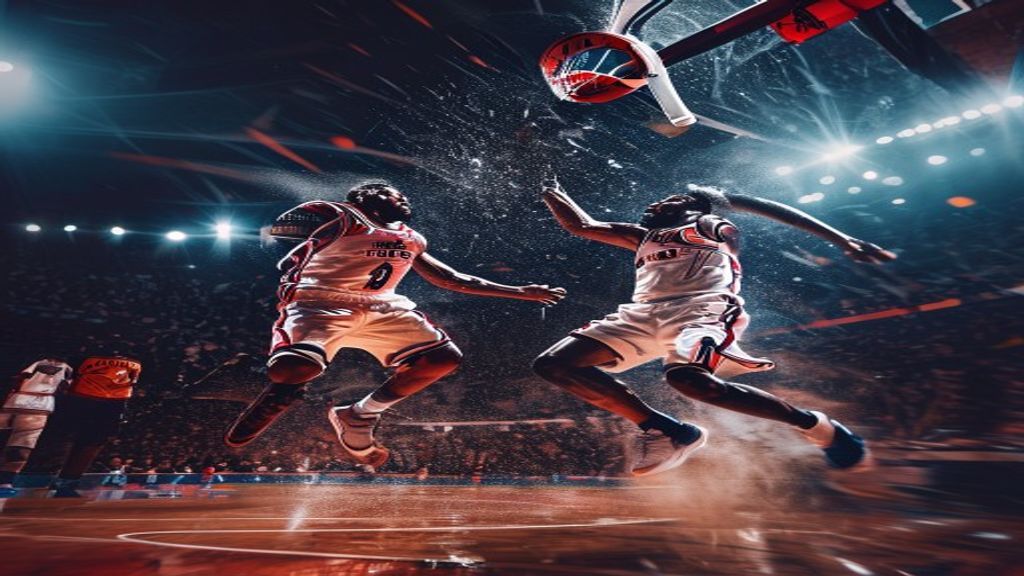
The NBA’s Pace Problem: When “Exciting” Basketball Becomes Exhausting
In theory, the modern NBA should be the most thrilling version of basketball ever played. Games average over 115 points per team. Three-pointers rain from every angle. Athletes are faster, more skilled, and more versatile than in any previous era. The highlight reel never ends.
So why does watching a regular season game in 2026 feel like eating candy for dinner? Immediately satisfying, ultimately hollow, and weirdly tiring.
The Metrics Look Great. The Feeling Doesn’t.
NBA executives love to cite pace and efficiency numbers as evidence of a healthier game. Possessions per 48 minutes are at historic highs. Three-point attempts as a percentage of total shots have never been greater. Scoring is up, turnovers are down, and player efficiency ratings trend ever upward.
But there’s a concept in psychology called habituation — the process by which repeated stimuli lose their emotional impact. When every possession is designed to produce a high-value shot, every bucket starts to feel equivalent. The mid-range jumper with a hand in the face used to feel dangerous precisely because it was inefficient — a player imposing their will against the odds. Now that “suboptimal” shots have been largely coached out of the game, the emotional variance that makes sports thrilling has narrowed dramatically.
Defense Has Become a Spectator
Perhaps the most underappreciated consequence of the pace revolution is what it’s done to defensive basketball. Physical defense — the kind that used to define playoff basketball — has been systematically penalized out of existence. Rule changes throughout the 2010s and early 2020s designed to open up the game have had a cascading effect: help defense is harder to execute, hand-checking is a foul, and officials are instructed to protect ball-handlers above all else.
The result is a league where defensive excellence is nearly invisible to casual viewers. You can watch an entire game and struggle to identify a single standout defensive play. Blocks and steals happen, but the grinding, suffocating team defense that made the 2004 Pistons or the 2016 Cavaliers compelling has no real place in today’s game.
When defense becomes window dressing, offense loses its context. A 40-point night means less when the opponent couldn’t stop anyone.
The Three-Point Monoculture
Let’s talk about the shot that ate basketball. The three-pointer is not, in itself, the problem. The monoculture around it is. When every team’s offensive identity orbits around corner threes and kick-out opportunities, strategic diversity collapses. There are only so many ways to run a pick-and-roll into a corner three before it stops feeling like strategy and starts feeling like procedure.
The irony is profound: the shot that was supposed to democratize basketball by punishing lazy defense has instead homogenized it. Post play is nearly extinct. The mid-range is considered almost a character flaw. The game has optimized itself into a narrow corridor of acceptable actions, and it’s aesthetically poorer for it.
What the League Could Do
None of this is irreversible. The NBA has always been willing to adjust rules when the product suffers — the hand-check rules of the early 2000s, the zone defense legalization, the pace-of-play reforms. A few targeted interventions could restore variety:
- Widen the lane: Encouraging post play by giving big men more room to operate would bring back a diversity of offensive approaches.
- Re-examine foul thresholds: Small adjustments to what constitutes a shooting foul on three-point attempts would reduce the cynical “foul hunting” that clogs games with dead-ball time.
- Reward defensive metrics: More visible recognition of defensive performance — through broadcasting, awards voting, and analytics coverage — would shift the cultural conversation.
Conclusion
The NBA isn’t broken. It’s over-optimized. The league has spent two decades engineering inefficiency out of the game and has succeeded brilliantly — at the cost of the beautiful friction that makes sports emotionally resonant. Efficiency is a tool, not a goal. The best version of basketball isn’t the one that produces the most points per possession. It’s the one that makes you lean forward in your seat.
The league still can. It just needs to remember that not every problem is solved by going faster.