The NBA's Pace Problem: Has the League Optimized the Fun Out of Basketball?
The NBA's obsession with three-pointers and pace-and-space efficiency has produced record-breaking offenses, but critics argue the league has traded artistry and variety for a homogenized style of play that is slowly alienating casual fans.
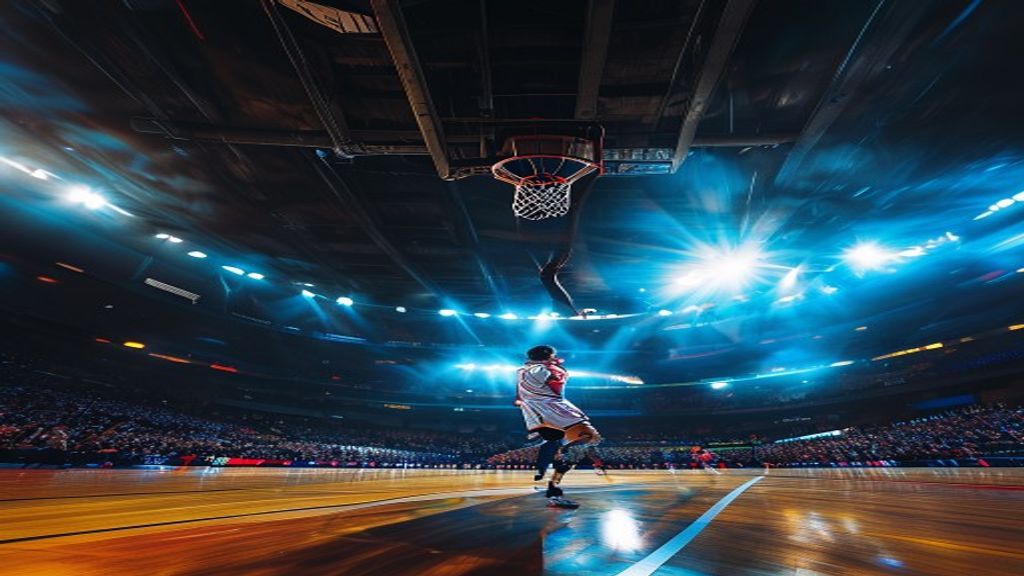
The NBA’s Pace Problem: Has the League Optimized the Fun Out of Basketball?
In 2026, NBA teams will attempt more three-pointers per game than at any point in the league’s history — again. It’s a milestone that gets announced almost every season now, like a broken record that everyone has agreed to celebrate. Analytically, the logic is airtight. A 33% three-point shooter scores more efficiently than a 50% mid-range shooter. The math won. But somewhere between the spreadsheets and the shot charts, a nagging question has grown louder: did we optimize the soul out of basketball?
The Analytics Revolution: A Genuine Success Story
Let’s be honest about what the data-driven era delivered. Offenses are more efficient than ever. The pace of play is fast and frenetic. Stars are healthier due to smarter load management. Parity across the league has genuinely improved — nine different franchises have reached the Finals in the last eight seasons. These are not small wins. The Moreyball revolution, born in Houston and now ubiquitous, turned basketball into a more rational sport. It eliminated genuinely bad shots and rewarded intelligent spacing.
But Something Feels Flat
Yet television ratings for the regular season have plateaued, and arena atmosphere surveys consistently report that casual fans find individual games harder to emotionally invest in. When every possession ends with a kick-out three or a drive-and-kick sequence, the aesthetic texture of the game compresses. The post-up artist, the floater specialist, the pull-up mid-range scorer — these players haven’t disappeared, but they’re operating in a cultural climate that treats their craft as a statistical inefficiency.
Kobe Bryant’s infamous mid-range jumper, once a signature of individual brilliance, is now routinely cited in coaching circles as a “negative play.” That framing is analytically defensible but culturally impoverishing. Sport is not purely about efficiency. It is about expression.
The Mid-Range Renaissance That Almost Was
There was a moment — roughly 2021 to 2023 — when a mid-range revival seemed possible. DeMar DeRozan’s MVP-caliber season with the Bulls using almost exclusively pull-up twos reignited a conversation about aesthetic diversity in basketball. For two years, commentators asked whether the data had overcorrected. Then the three-point wave crashed back in with renewed force, and DeRozan’s style became a nostalgic footnote rather than a movement.
What Rule Changes Could Fix It
The NBA’s Competition Committee has floated several ideas to reintroduce variety. A four-point line — placed one step beyond the current arc — would create a risk-reward layer that incentivizes creativity. Shortening the three-point line in the corner to reduce the volume of “easy” corner threes has also been discussed. More controversially, some analysts have proposed a “two-for-one zone” restricting corner three attempts in the final two minutes of close games, forcing teams to generate offense from more dynamic positions.
None of these have been implemented, and league conservatism suggests they won’t be soon. But the conversation is worth having.
The Superstar Problem
There’s another layer here: the NBA lives and dies by its superstars, and in a league dominated by collective spacing systems, individual brilliance is harder to isolate and market. A player dropping 40 points in a system that generates 50 open looks feels different from a player carving up a defense through personal will. The league knows this — which is why marketing still leans heavily on individual narratives even as the game becomes increasingly collective.
Conclusion
The NBA did not make a mistake. It followed reason toward better basketball. But reason alone cannot sustain a sport’s culture. The league’s next great challenge is not analytical — it is artistic. It must find a way to honor efficiency without erasing the beauty of the inefficient, to celebrate the corner three without killing the pull-up two. Basketball is more than math. Someone should probably remind the shot charts.