Should the NFL Finally Eliminate the Kickoff? The Safety vs. Soul Debate
The NFL's ongoing attempts to neuter the kickoff in the name of player safety have sparked one of sport's most genuine philosophical debates: at what point does making a game safer fundamentally change what the game *is*?
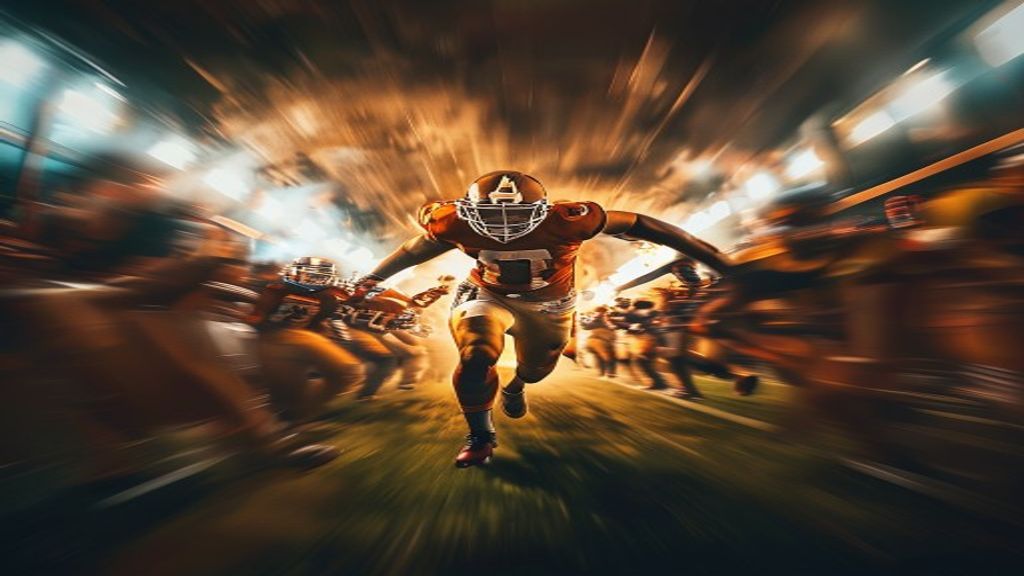
Every football fan remembers their first kickoff return touchdown. The moment a returner catches the ball in the back of the end zone, takes two steps, and then — against all coaching wisdom — decides to run it out. The electric tension. The blockers forming a wall. The crowd rising before he’s even crossed the 20-yard line. It is one of the most purely thrilling plays in American sports.
The NFL, in its methodical way, has been trying to kill it for years.
A Brief History of the NFL’s Kickoff War
The campaign began in earnest in 2011, when the league moved the kickoff line from the 30 to the 35-yard line, dramatically increasing touchback rates. Over the following decade, rule changes piled up: coverage units restricted in their running start, blocking rules altered, wedge blocking eliminated. The 2023 experimental kickoff format — which essentially staged players in static positions until the ball was caught — was the most radical intervention yet.
The stated motivation is always player safety, and the data is real: kickoffs and punts generate concussions at a significantly higher rate per play than scrimmage plays. In a league that has spent billions settling concussion litigation, eliminating high-speed collisions on special teams is a genuine medical and legal imperative.
The Case for Elimination
Let’s steelman the abolitionists. The marginal entertainment value of the average kickoff — which most of the time results in a touchback and a first-and-ten at the 25 — does not obviously justify the injury risk to the players executing it. The most spectacular kickoff returns are outliers in a sea of mundane plays. A sport can be redesigned around its best moments rather than its average ones.
The Canadian Football League, which retained its traditional kickoff format, offers a parallel universe for comparison. CFL kickoff injuries run at a higher per-play rate than their NFL equivalent — and yet the CFL’s return game is widely considered more entertaining. Safety and spectacle are in genuine tension, and reasonable people can disagree about where to draw the line.
The Case Against Elimination
But here’s what the safety-first argument misses: football is, at its core, a physical sport. The danger is not incidental to its appeal — for many fans and players, it is constitutive of it. Attempts to strip out physicality in the name of safety don’t just make the game safer; they make it different. At some point, the game being protected is no longer quite the same game.
There’s also a slippery slope worth naming. If kickoffs are eliminated because they produce concussions at a higher-than-average rate, what is the principled argument against eliminating other high-risk plays? Punting? Goal-line stands where linemen collide at full speed? The blitz? Every aggressive defensive play involves a collision that could theoretically be regulated away.
The Players’ Perspective
This debate is also complicated by the fact that the players most affected — special teams coverage players and kick returners — have mixed views. Some veterans have openly welcomed the reduced risk. Others have argued that the role of a return specialist, a position that can launch an entire career, is being legislated out of existence. For a player with elite return skills but limited use in a traditional offensive or defensive scheme, the kickoff is not just dangerous — it’s a livelihood.
A Middle Path?
The most intellectually honest position is probably that the NFL will never fully eliminate the kickoff because it cannot afford to acknowledge, even implicitly, that its signature sport is too dangerous to play. Instead, we’ll get a permanent state of tinkering: new formats, new rules, incremental restrictions that reduce injury rates without eliminating the play entirely.
Conclusion: What Are We Actually Protecting?
The kickoff debate ultimately forces a question the NFL would rather not answer directly: what is the game for? If it is primarily entertainment, then safety and spectacle can be optimized together. If it is primarily a test of athletic and physical excellence, then some degree of risk is inherent to the endeavor. American football has always tried to be both things simultaneously, and the kickoff is simply where that tension has become impossible to ignore.