Why the Olympic Esports Games Won't Save or Kill Traditional Sports — But Will Change Them
As the Olympic Esports Games continue to grow in legitimacy and viewership, the real story isn't competition between digital and physical sport — it's what each is quietly borrowing from the other.
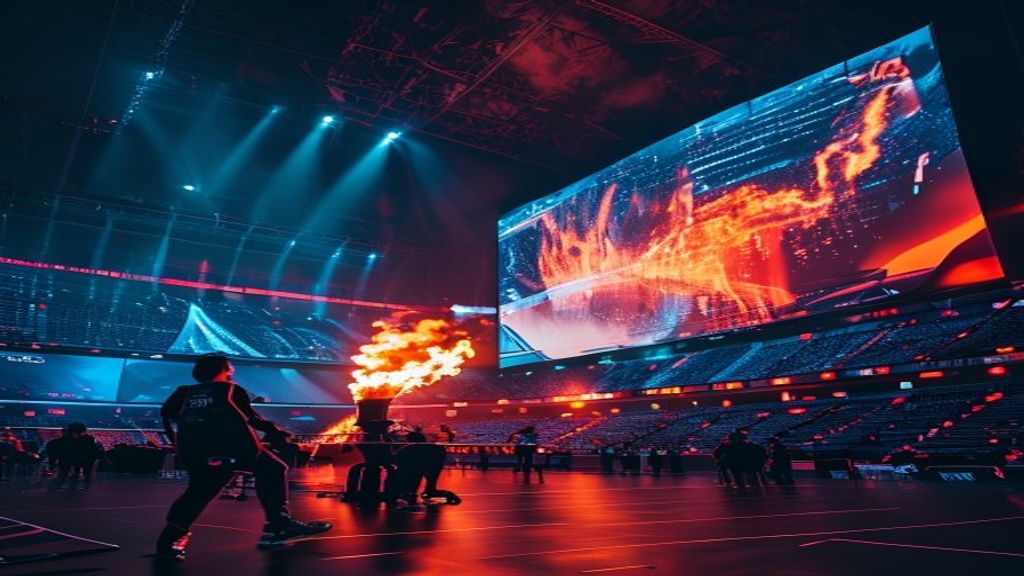
Why the Olympic Esports Games Won’t Save or Kill Traditional Sports — But Will Change Them
Every time esports edges further into mainstream legitimacy, the same tired debate reignites: Is this the beginning of the end for traditional sport? Will kids raised on simulation games stop caring about actual athletics? Will brands follow eyeballs away from stadiums and toward screens?
The answer to all three questions, in 2026, is a fairly confident no — but that doesn’t mean the relationship between esports and traditional sport is static. Something more subtle and more interesting is happening.
The Coexistence Reality
Viewership data continues to confound the apocalyptic predictions. Esports audiences have grown, but largely among demographics who were already underserved by traditional sports broadcasting rather than by converting existing fans. The 16-year-old watching a global eFootball tournament in Seoul is not, in most cases, the same person who would otherwise be watching a Premier League match on a Saturday afternoon.
The audience pools are different. They overlap at the edges, but they are not in direct competition for the same attention in any meaningful way. Traditional sports rights deals — NFL, NBA, Champions League — continue to command record valuations. The scarcity premium of live sport remains essentially untouched by the esports boom.
What Traditional Sports Are Stealing from Esports
The more interesting story is cultural cross-pollination. Major sports properties have been aggressively borrowing the grammar of gaming for nearly a decade now: second-screen experiences, real-time statistics overlays, fantasy integration, and the short-form highlight culture pioneered on Twitch and YouTube Gaming.
But the borrowing has deepened. Stadium designers are now explicitly modeling fan engagement features on game UX principles — interactive elements, personalized data feeds, and gamified loyalty programs that would have seemed absurd in a sporting context 15 years ago. Broadcast packages are increasingly built around the assumption that the viewer has a second screen open and wants information density, not passive watching.
Esports didn’t cause this shift. But it accelerated and validated it by proving there was a mass audience for information-rich, participatory sports viewing.
What Esports Is Stealing from Traditional Sport
The influence runs the other way, too. Esports organizations have spent the last five years in a frantic attempt to build the institutional legitimacy that traditional sports took a century to develop: city-based franchises, player unions, structured seasons with clear narratives, superstar athlete branding, and — crucially — the emotional stakes that come from history and continuity.
The Olympic Esports Games are the most significant milestone in this process. Olympic legitimacy imports centuries of meaning, ritual, and cultural authority. When a Virtual Sailing athlete stands on a podium under their national flag, the IOC is explicitly asking the world to apply traditional sporting emotional frameworks to a digital competition.
Whether it works is still an open question. But the aspiration reveals how much esports needs traditional sport’s cultural infrastructure, even as traditional sport courts esports’ audience infrastructure.
The Real Battleground: Youth Participation
If there is a genuine tension point, it’s not in viewership — it’s in participation. Hours in the day are finite. Youth athletic programs across Europe and North America have documented declining participation rates in team sports since the late 2010s, and screen-based entertainment is one factor among many in that trend.
This is worth taking seriously. The physical health, social development, and community-building functions of organized youth sport are not replicated by esports, no matter how competitively structured. If traditional sports bodies are going to fight any battle against the gaming industry, this is the one that actually matters.
Conclusion
The framing of esports versus traditional sport is a media convenience that doesn’t reflect the actual dynamic. These are two industries in a complex, ongoing negotiation — borrowing tools, audiences, and legitimacy from each other while serving genuinely different human needs. The Olympic Esports Games are not a threat to the marathon or the 100-meter dash. They are, instead, a mirror held up to what sports, in the broadest sense, is becoming: more data-rich, more participatory, more global, and considerably harder to define.