Why the Six Nations Has Become Rugby's Most Important Cultural Event
Beyond the scrums and lineouts, the Six Nations Championship has evolved into something that transcends sport — a annual collision of national identity, political subtext, and collective emotion that no other rugby competition can replicate. The question is whether the sport is doing enough to protect it.
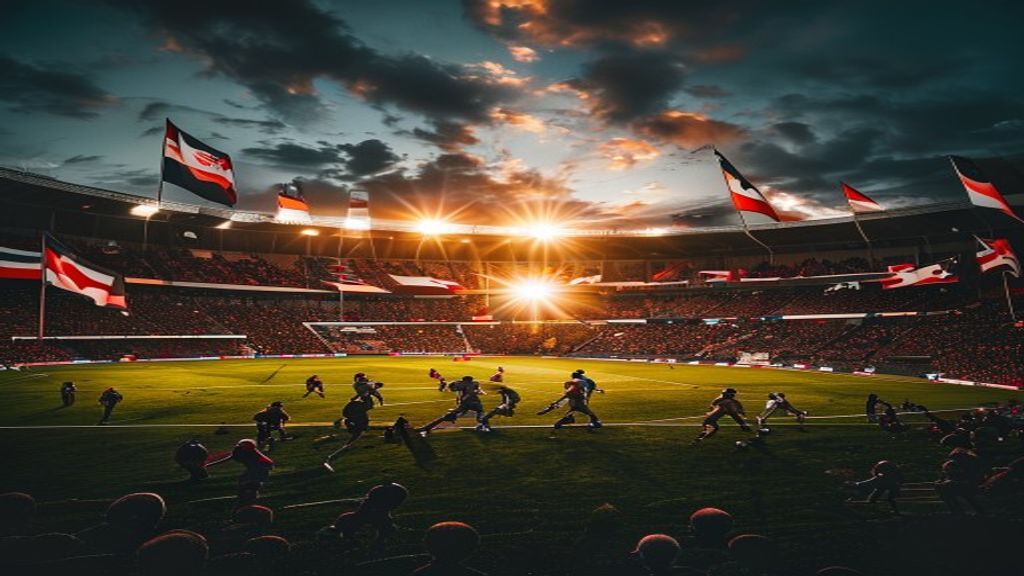
Every February, something unusual happens across six European nations. Pubs fill up at 2pm on Saturdays. Grandparents who cannot name a single player know the fixture list by heart. Politicians speak carefully about results. Rugby, a sport that globally sits well behind football, cricket, and basketball in mainstream reach, briefly becomes the only thing that matters — and it does so with an intensity that even the sport’s most ardent administrators struggle to fully explain.
The Six Nations Championship, in its current form running since 2000 and in earlier incarnations stretching back to 1883, is not just a rugby tournament. It is one of the last great unmediated expressions of European national identity in sport — raw, tribal, occasionally awkward, and completely irreplaceable.
The Identity Architecture of the Championship
What separates the Six Nations from comparable competitions is its geography of meaning. When Ireland plays England, the fixture carries over a century of political and cultural sediment. When France hosts Scotland, it is not merely fifteen men against fifteen; it is two distinct philosophies of how rugby should be played, argued out on a Parisian pitch. Italy’s annual struggle — competitive now more than ever following their tactical renaissance under a new generation of coaches — carries the specific dignity of a nation asserting its belonging in European rugby’s aristocracy.
This is not manufactured drama. It cannot be franchised or relocated. The Six Nations means what it means because of where the teams come from and what those places are to each other.
The 2025-26 Cycle and the New Competitive Order
This year’s championship has added fresh tactical intrigue. Ireland, dominant for three seasons, have faced a genuine challenge from a Scotland side that has finally converted its backline brilliance into forward-platform consistency. France’s attack remains the most aesthetically thrilling in world rugby — their offload game averaged 23 clean offloads per match in this year’s championship, a figure that would look extraordinary in sevens rugby, let alone the fifteen-man game.
But perhaps most significantly, Wales — enduring a painful multi-year rebuild following a constitutional crisis in Welsh rugby — showed signs of structural recovery that matter beyond the tournament standings. Rugby in Wales is not a leisure activity. It is civic infrastructure. When Wales struggles, communities feel it. When they win, it’s municipal.
The Commercial Threat Nobody Is Talking About Enough
Here is where the analysis must turn uncomfortable. The Six Nations’ cultural power is currently being tested by the same forces reshaping every major sports property: private equity involvement, broadcast fragmentation, and the competing gravitational pull of global club competitions.
Since CVC Capital Partners acquired a 14.3% stake in the Six Nations in 2021, the tournament has operated under commercial pressures that occasionally sit in tension with its cultural role. The push toward premium streaming platforms risks detaching the championship from the casual fan — the grandparent, the occasional viewer — who has historically been its greatest ambassador.
A Six Nations locked behind a paywall that a significant portion of its audience cannot easily access is not the Six Nations. It is a product that used to be the Six Nations.
What Protection Looks Like
Other major sporting events — the FIFA World Cup, the Olympics, the Grand National — are designated as listed events in several European countries, meaning they must be available on free-to-air television. The Six Nations retains some of these protections in some territories, but the framework is patchwork and increasingly strained.
Rugby’s governing bodies face a choice that is less about money than it appears. The revenue ceiling for a Six Nations accessible to everyone is lower than the ceiling for a fully paywalled product. But the cultural capital — the thing that makes rugby matter in Dublin, Edinburgh, and Llanelli in ways that no other sport can replicate — is built on accessibility. Destroy the accessibility and you eventually hollow out the meaning.
Conclusion: The Tournament That Must Not Be Optimized to Death
The Six Nations is proof that sport can still function as genuine shared culture — not just content, not just IP, but a collective experience that structures time and identity for millions of people who would not describe themselves as sports fans.
That is extraordinarily precious. It is also, in the current sports media landscape, extraordinarily fragile.
The scrum and the lineout can be coached and refined. The feeling of watching your nation run out in February, knowing that 50,000 people around you understand exactly what is at stake, cannot be manufactured. It can only be inherited — or lost.