Why VAR Hasn't Failed Football — Football Has Failed VAR
Six years into widespread VAR adoption, the technology is consistently blamed for killing football's spontaneity — but the real problem is how football's governing bodies have chosen to implement it, not the tool itself.
Why VAR Hasn’t Failed Football — Football Has Failed VAR
Every weekend, in living rooms and pubs across the globe, the same ritual plays out. A goal is scored. Fans begin to celebrate. Then comes the pause — that agonising, momentum-draining pause — as the VAR check graphic appears on screen. Sometimes the goal stands. Sometimes it doesn’t. Either way, something vital has been lost: the unbridled, immediate joy of a football moment.
The instinct is to blame the technology. Scrap VAR, the chants go. Let football be football again. It’s an emotionally satisfying argument. It’s also, I’d contend, the wrong one.
The Tool Isn’t the Problem
VAR — Video Assistant Referee technology — is, at its core, a neutral instrument. It can review footage, measure lines, and provide referees with information that the human eye simply cannot process in real time. In isolation, that is unambiguously good. Fewer wrong decisions, fewer careers and trophies defined by an official’s honest but costly mistake.
The problems arise entirely from the decisions made around the technology: what it reviews, how long it takes, which standard of evidence it requires, and — critically — how much information is shared with the fans inside the stadium and watching at home.
Implementation Failures, Not Technological Ones
Consider the handball rule. VAR arrived simultaneously with one of the most convoluted, ever-shifting handball interpretations in football history. The technology isn’t responsible for the incoherence of the rule it enforces — but it gets the blame, because it’s the visible mechanism delivering confusing outcomes.
Or consider offside. Automated offside lines, introduced to add precision, have instead introduced a new psychological horror: goals ruled out because a player’s armpit was half a bootlace ahead of a defender. Technically correct. Spiritually absurd. Again — not a failure of the camera or the algorithm. A failure of the standard football chose to apply.
The Communication Catastrophe
Of all VAR’s implementation failures, the most fixable — and most damaging — is the communication gap. In rugby, when the Television Match Official is consulted, the entire stadium and broadcast audience hears the conversation in real time. The process is transparent, immediate, and actually increases engagement because fans understand what is being reviewed and why.
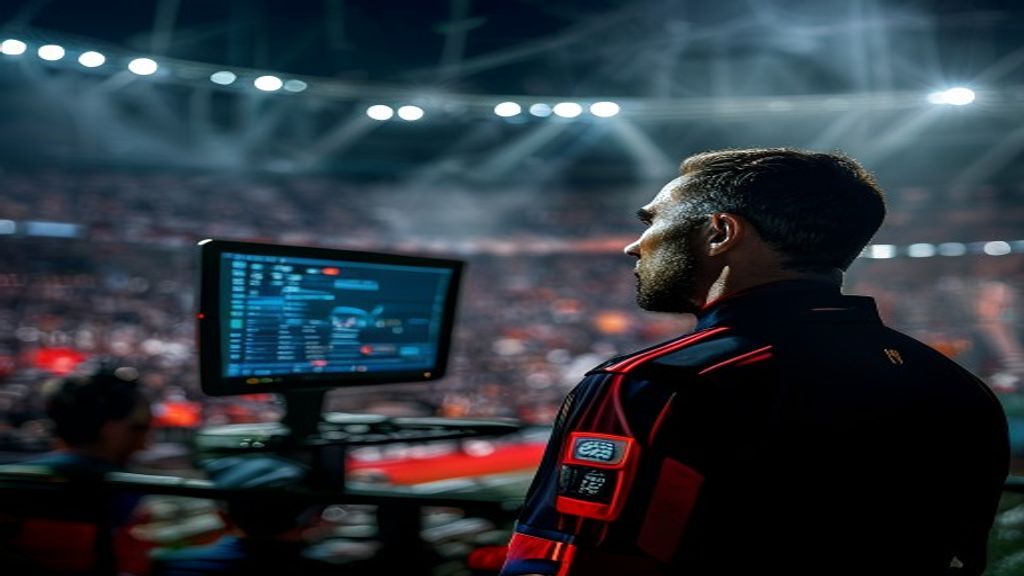
In football, the VAR process is conducted behind closed doors, delivered to fans as a graphic and a verdict. No context, no reasoning, no humanity. It breeds distrust and conspiracy theories, because the decision appears to arrive from nowhere, handed down by an unseen authority. The sport has made its own officiating process needlessly opaque.
What Good VAR Implementation Looks Like
Several leagues have experimented with faster review protocols, mandatory broadcast audio from the VAR room, and more clearly defined intervention thresholds — only clear and obvious errors trigger a review, rather than pixel-level analysis of every incident. These reforms, where adopted seriously, have measurably improved fan experience without sacrificing accuracy.
The technology is capable of being this: a quick, transparent safety net that corrects egregious errors and then gets out of the way. Instead, football has built a bureaucracy around it.
Conclusion
VAR will not be scrapped — nor should it be. The question is whether football’s governing bodies have the intellectual honesty to admit that the tool was given to them in good working order, and they are the ones who broke it. Reforming VAR isn’t a technological challenge. It’s a governance one. And football has always been far better at identifying its problems than summoning the courage to fix them.