Why Women's Football Doesn't Need Men's Football's Permission to Be Great
Women's football is frequently measured against men's standards it never asked to meet — and that framing is the single biggest obstacle to understanding how extraordinary the women's game has become.
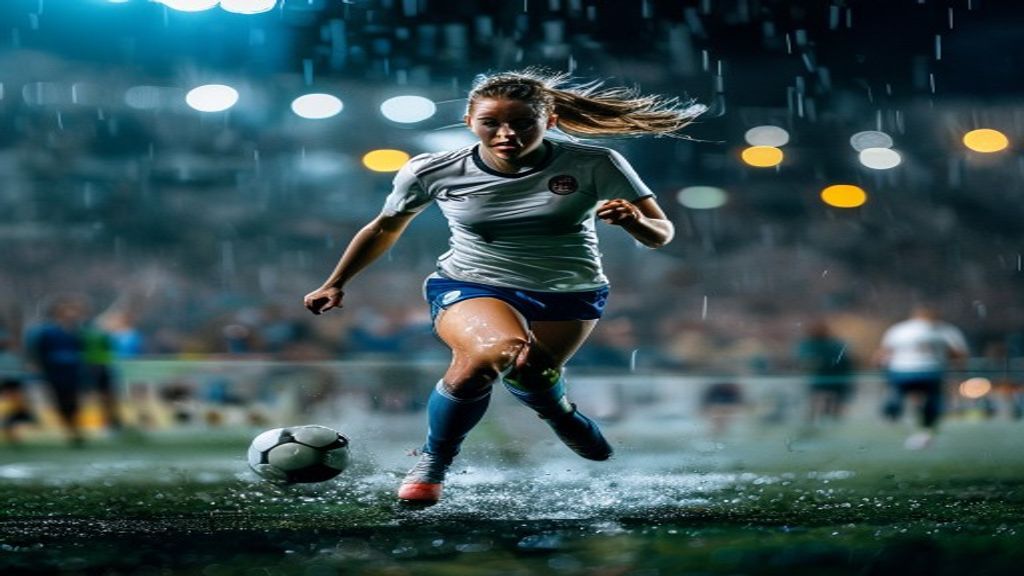
Why Women’s Football Doesn’t Need Men’s Football’s Permission to Be Great
Every breakthrough moment in women’s football comes packaged with a caveat. Record crowd? “Impressive, but still smaller than the men’s Champions League final.” Exceptional technical display? “Getting closer to the men’s game every year.” It’s a comparison so reflexively applied that most people don’t notice they’re making it — and it’s one of the most subtly damaging frameworks in sports media.
The women’s game doesn’t need to be measured against the men’s game to be extraordinary. It needs to be understood on its own terms. And when you do that honestly, what you find is a sport in the middle of one of the most compelling developmental arcs in modern athletic history.
A Different Game, Not a Lesser One
Let’s be structurally honest about what women’s football actually is right now. The top tier — clubs like Barcelona Femení, Chelsea Women, and Lyon Féminin, national teams like Spain, England, and the United States — play a technically precise, high-tempo, tactically sophisticated game. The 2025 Women’s Champions League final drew 92,000 spectators in a sold-out Camp Nou. Those weren’t charity attendees. They were fans.
But the gap in physical parameters between men’s and women’s elite football is real, and pretending otherwise doesn’t serve anyone. Sprint speeds differ. The long ball dynamics are different. Set-piece physics play out differently. These aren’t deficiencies — they’re the characteristics of a different game. Ice hockey and field hockey aren’t lesser versions of each other simply because they share a puck and a stick.
The women’s game rewards sustained technical play, intricate combination football, and high defensive organization in ways that produce a genuinely distinct aesthetic. Once you stop waiting for it to replicate the men’s game and start watching it as its own thing, it becomes riveting.
The Media Framing Problem
Broadcast coverage still largely defaults to a hierarchy-of-legitimacy framing. Pundits will praise a women’s performance with language that subtly positions it as aspiring toward male standards: “That was as good as you’ll see anywhere.” The unspoken comparison is always there.
This matters because language shapes perception, and perception shapes investment — from sponsors, from broadcasters, from young players deciding whether to commit to the sport. When every compliment carries the ghost of a qualifier, the cumulative message is that the women’s game exists on a conditional basis.
Major sports networks have begun to course-correct. Women’s football coverage hours across European broadcasters rose 34% year-on-year in 2025. But the editorial instinct to contextualize women’s football through men’s football remains deeply embedded.
The Youth Pipeline Is the Real Story
The most underreported dimension of women’s football’s growth is what’s happening at the youth level. In the UK, girls’ participation in organized football has doubled since 2019. In the United States, more girls now play organized soccer than boys. Spain’s youth academies have integrated fully funded girls’ programs at every professional club following landmark federation mandates in 2023.
This pipeline matters enormously. The current elite generation of women’s footballers largely grew up in systems that treated women’s football as secondary. The generation arriving in the next decade will have grown up with full professional academies, specialized coaching, and role models who fill 90,000-seat stadiums. The trajectory isn’t just upward — it’s accelerating.
What Genuine Support Actually Looks Like
Supporting women’s football doesn’t mean insisting it’s identical to the men’s game or demanding it doesn’t get compared. It means building infrastructure, paying coaches fairly, scheduling top fixtures in prime broadcast slots rather than Sunday afternoon fillers, and — most importantly — covering it with editorial curiosity rather than condescension.
It also means letting the game make its own culture. Women’s football has supporter communities, tactical subcultures, and player personalities that are entirely its own. Give those space to breathe, and the audience follows naturally.
Conclusion: Drop the Measuring Stick
The women’s game will be fine regardless. The crowds are growing, the investment is arriving, and the quality of play at the top level is genuinely spectacular. But it would get there faster — and the cultural conversation around it would be richer — if we collectively agreed to put down the measuring stick that was never a fair instrument to begin with.
Women’s football is not men’s football minus something. It is its own thing, entirely. And it’s great.