Camila Reyes Wins Roland Garros in Stunning Three-Set Comeback Against World No. 1
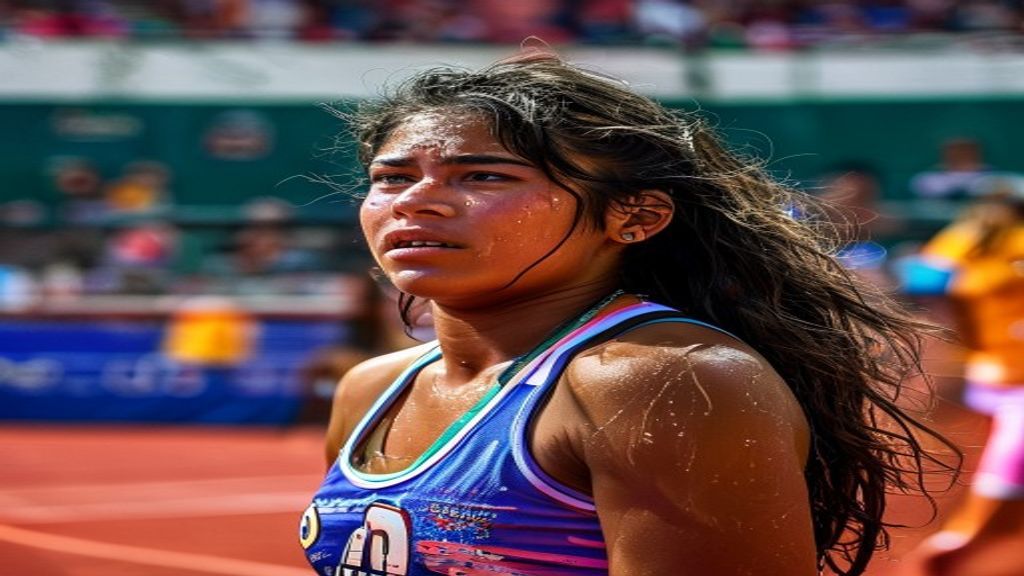
Colombian teenager Camila Reyes staged one of the most dramatic comebacks in Grand Slam history Saturday, erasing a one-set deficit to defeat world number one Petra Novákova 4–6, 7–5, 6–2 and claim her first major title at just 19 years old. The Court Philippe-Chatrier erupted as Reyes collapsed to the clay in tears after her final forehand winner.
Camila Reyes Wins Roland Garros in Stunning Three-Set Comeback Against World No. 1
PARIS, FRANCE — April 18, 2026
The red clay of Roland Garros has witnessed countless acts of sporting theater across its storied history. On Saturday afternoon, it witnessed something new — the coronation of Camila Reyes, an unheralded 19-year-old from Medellín, Colombia, who defeated world number one Petra Novákova 4–6, 7–5, 6–2 to become the youngest Roland Garros women’s champion in over two decades.
The match lasted two hours and forty-four minutes. It felt like a lifetime. It also felt like it was over in a blink.
A Slow Start for the Underdog
Reyes entered the final as a heavy underdog — ranked 22nd in the world, making only her second Grand Slam final appearance, facing a Novákova who had won the last three majors she’d entered and had not lost a set in this tournament. The opening set unfolded largely according to script. Novákova’s baseline dominance was on full display, her heavy topspin forehand pinning Reyes behind the baseline and forcing errors.
The Czech champion broke serve in the fifth game and served out the first set with clinical efficiency. Reyes won only 38% of her second-serve points in the opening set — a number that had commentators questioning whether this would be a competitive final.
The Turning Point
The second set was a masterclass in resilience. Reyes, coached by her father Eduardo — a former Colombian Davis Cup player — began flattening her groundstrokes and attacking Novákova’s backhand with a ferocity that hadn’t been visible in the first set.
At 4–5, 30–40 down on her own serve, Reyes faced a match point. What followed was a 23-shot rally that had the entire Court Philippe-Chatrier on its feet. Reyes’s final shot — a blistering down-the-line forehand that kissed the baseline — drew a sharp, disbelieving exhalation from Novákova. Reyes pumped her fist and screamed.
“That rally changed everything for me. I told myself — if I can win that point, I can win this match. I don’t know why I believed it. I just did.” — Camila Reyes
She held serve, broke Novákova in the next game, and took the second set 7–5.
The Third Set — Total Dominance
If the second set was a comeback, the third was a statement. Reyes broke Novákova’s serve in the opening game and never looked back. Her movement — always exceptional — reached another level entirely. She retrieved balls that seemed unreachable, redirected pace she had no right to redirect, and produced 14 winners in the final set against just 2 unforced errors.
Novákova, to her credit, never stopped fighting. But Reyes had found something — a frequency, a confidence — that the world number one simply could not match in those final forty minutes.
The match ended on a forehand winner down the line at 6–2. Reyes dropped to her knees, pressed her palms into the red clay, and sobbed.
Stats Summary
| Stat | Reyes | Novákova |
|---|---|---|
| Aces | 4 | 7 |
| Winners | 38 | 29 |
| Unforced Errors | 21 | 34 |
| Break Points Won | 5/8 | 2/9 |
| First Serve % | 64% | 71% |
A Star Is Born
Reyes becomes only the second Colombian player — male or female — to win a Grand Slam singles title, a fact that was not lost on the thousands of Colombian supporters who had painted the stands yellow, blue, and red. Her father Eduardo, watching from the player’s box, was seen weeping openly before the final point was even struck.
“She has worked for this since she was six years old. Every morning, every evening, through injuries, through hard losses. This belongs to her completely.” — Eduardo Reyes, Camila’s father and coach
Novákova was gracious in defeat, acknowledging that she had been outplayed in the second and third sets.
“Camila was simply the better player today. She raised her level at the exact moment it mattered most. That is a champion’s quality. She deserves this.” — Petra Novákova
What This Means for Tennis
Reyes’s victory signals a genuine changing of the guard in women’s tennis. Young, fearless, and possessing a game built for clay — explosive footwork, heavy topspin, extraordinary stamina — she is the kind of player who does not simply win a Grand Slam and disappear. She is built to be here for a decade.
Roland Garros has a new queen. And she’s only 19.