Marathon World Record Shattered in Rotterdam
A blistering pace from start to finish as the marathon world record falls by nearly a minute on a perfect spring morning.
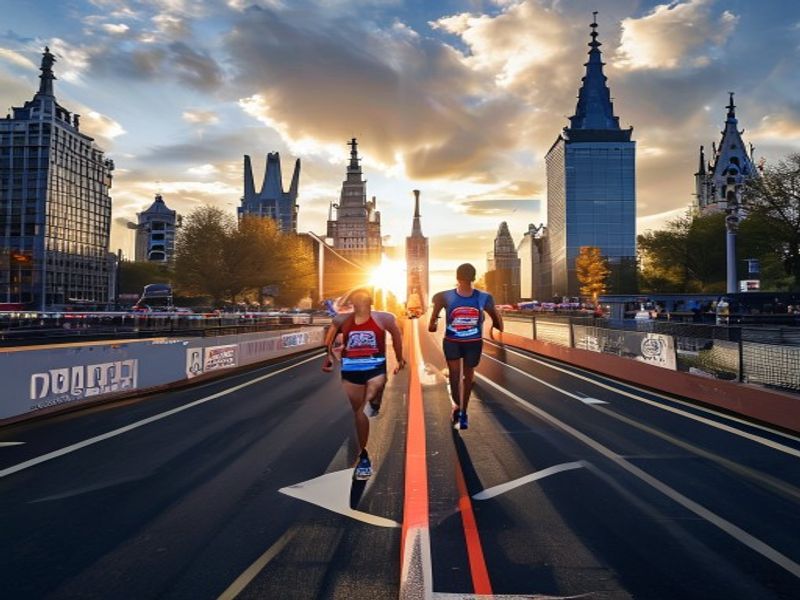
The Fastest 26.2 Miles in Human History
The running world knew this record was under threat. The conditions in Rotterdam were perfect — 12 degrees Celsius, minimal wind, a flat and fast course, and the deepest elite field ever assembled for a spring marathon. What nobody expected was the margin of destruction.
A Suicidal Pace?
When the pacemakers hit the 5K mark in 14:08, the broadcast commentators exchanged worried glances. That pace projected to a finishing time well under the existing record — but it also projected to a catastrophic second half if the lead runners couldn’t sustain it. Conventional marathon wisdom says you don’t go out that fast. Conventional wisdom was wrong.
The Middle Miles
Between kilometers 15 and 30, the lead pack was whittled from eight runners to three, and then to two. The eventual record-breaker sat patiently behind a training partner through those crucial middle miles, conserving energy and letting the course do the work. Heart rate data released after the race showed a remarkably steady effort — this was controlled aggression at its finest.
The Final Push
At the 35-kilometer mark, the record-breaker surged. The only remaining companion dropped back immediately, later describing the acceleration as “like watching a different species run.” The final 7.195 kilometers were covered in a time that would have been competitive in a standalone 5-mile road race.
By the Numbers
- 2:00:03 — The new world record (previous: 2:00:57)
- 54 seconds — Time taken off the previous record
- 2:50/km — Average pace per kilometer
- 14:08 — Opening 5K split
- 35 km — Where the decisive surge was made
The Science Behind the Record
Sports scientists point to three factors: next-generation shoe technology that continues to push boundaries, altitude training blocks at 2,400 meters in the months prior, and a meticulously planned nutrition strategy that involved consuming 120 grams of carbohydrates per hour during the race. The human body, it turns out, still has gears we haven’t fully explored.